
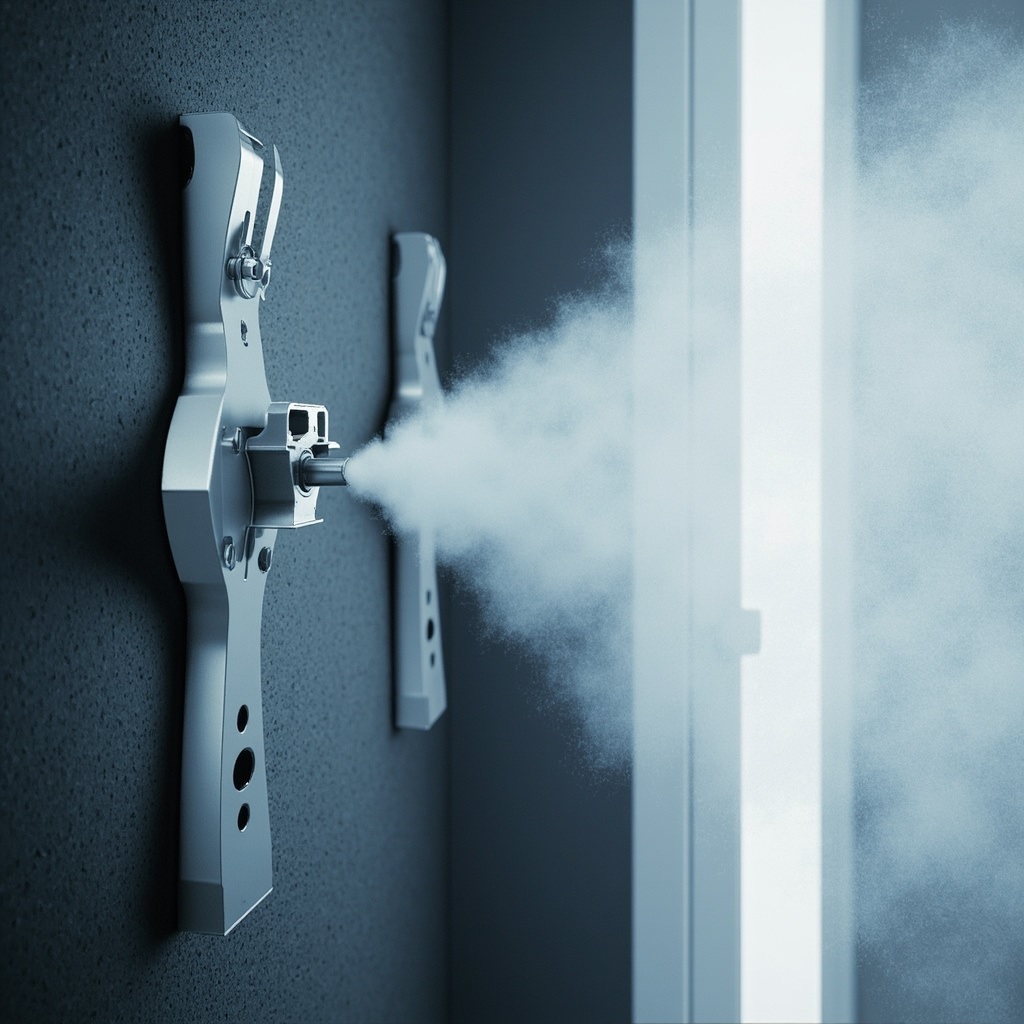
 If you live within a mile of the ocean, your curtain rods are fighting a war you didn’t sign them up for. That salty mist that makes your morning coffee taste like the sea? It’s also eating through your Aluminum Alloy Curtain Hardware stuff that looks shiny in the store but starts pitting and flaking before the first tourist season ends. This is where salt spray testing becomes the single most critical factor separating junk from genuine coastal-grade curtain hardware.
Let’s cut through the marketing fluff. The industry standard everyone throws around is ASTM B117. It’s the test that subjects a metal bracket or finial to a constant fog of 5% sodium chloride solution at 95 degrees Fahrenheit. Sounds brutal, right? It is. But here’s the dirty secret: passing ASTM B117 for 72 hours is the bare minimum. That’s the “I won’t rust in my warehouse” standard. For true coastal-grade performance, you need hardware that survives 500 hours or more. That’s the difference between a rod that looks new after three summers and one that leaves orange streaks down your drywall.
Why does this matter to you? Because coastal-grade isn’t just a buzzword. It’s a promise backed by metallurgy. The best curtain hardware for beachfront properties uses 316 stainless steel, not 304. The difference is molybdenum. That extra element fights off chloride ion attack like a bodyguard. When a manufacturer tells you their product is “marine grade,” ask for the salt spray test report. If they can’t produce one showing 500+ hours with no red rust, you’re buying a lie wrapped in a pretty finish.
Here’s the real kicker: the testing doesn’t stop at the metal. Coastal-grade hardware demands that every screw, every cap, every tiny set screw gets the same treatment. We’ve seen $200 curtain rods fail because the manufacturer used a carbon steel spring inside the tension mechanism. The spring corroded, the rod sagged, and the customer blamed the whole system. A proper salt spray standard tests the assembly, not just the decorative parts. That means the brackets, the finials, the telescoping tubes, and even the rubber end caps need to resist degradation.
So when you’re shopping for hardware that faces the ocean, stop looking at the finish. Look at the test data. A brushed nickel coating can look flawless for six months, then bubble up like a bad sunburn. The real indicator is the salt spray rating. Demand 500 hours minimum. Demand 316 stainless steel. And if a salesperson starts talking about “lifetime guarantees” without mentioning ASTM B117, walk away. Your curtain hardware should outlast your curtains. And on the coast, that means it needs to fight corrosion every single day.
