

Gutter maintenance is one of those house chores people love to ignore right up until the day water starts showing up where it absolutely shouldn’t.
Here’s the thing: gutters aren’t “nice to have.” They’re a routing system for thousands of gallons of water a year, and if that routing fails, your roof edge, siding, and foundation become the backup plan. That’s a terrible plan.
Unpopular opinion: clogged gutters are basically self-inflicted water damage
I’ve seen homeowners obsess over fancy fixtures and then shrug at a gutter full of maple helicopters, roof grit, and half-composted leaves. Meanwhile, water is spilling over the edge, soaking the fascia, creeping behind siding, and pounding the soil at the foundation like a slow-motion jackhammer. Regular Seaford residential gutter maintenance stops that cascade before it starts.
One bad storm won’t always do it. Repetition will.
And if you live somewhere that freezes? Overflow plus freeze–thaw cycles turns “minor neglect” into warped troughs, popped fasteners, and ice dams that shove water up under shingles.
One-line reality check:
Your gutters don’t have to fall off to cost you money.
Gutters aren’t decorative trim. They’re structural risk management.
When gutters work, they move roof runoff to controlled discharge points, downspouts, so water exits your home’s perimeter instead of saturating it.
When they don’t, a predictable chain reaction starts:
– Roof edge stays wet → fascia and soffit soften, paint peels, nails loosen
– Siding gets hammered by overflow → staining, rot behind cladding, mold-friendly moisture
– Soil at the foundation saturates → settlement, cracks, basement seepage, shifting walkways
– Landscaping washes out → mulch migrates, beds erode, plants drown near downspouts
Now, this won’t apply to everyone, but if your lot drains poorly or your house sits at the bottom of a slope, gutter failures hit harder and faster. Water always chooses the easiest path. If you don’t give it one, it’ll make one.
The “clog timeline” (how small problems turn expensive)
A clean gutter fails quietly; a clogged one fails loudly and repeatedly.
Week 1, 4: Water overshoots the gutter edge during heavy rain. You might notice splatter marks on siding or muddy trenches under the drip line.
Season 1: Fascia staining becomes consistent. Some hangers start loosening because wet debris is heavy (and it stays heavy).
Year 1, 3: Moisture behind siding shows up as paint failure, soft trim, or a musty smell in an adjacent wall/attic area. In colder climates, ice dam patterns appear: thick ridges at the eaves and icicles that look pretty but signal trouble.
Year 3+: Foundation perimeter stays wet more often than it dries. That’s when you see basement dampness, efflorescence on masonry, or small cracks that weren’t there before.
Look, water damage rarely arrives as a dramatic event. It’s usually a subscription service you didn’t mean to sign up for.
Seams, slope, and hangers: the nerdy stuff that saves your foundation
If you want the technical version, gutter performance depends on three things more than any “upgrade” you can buy:
1) Tight seams (or better: fewer seams)
Sectional gutters have joints. Joints leak. Leaks dump water exactly where you don’t want it, behind the gutter line, right onto the fascia and down to the foundation.
In my experience, “it’s only a small drip” at a seam is often the first clue the whole run is slightly out of pitch or pulling away from the fascia.
2) Correct slope
Gutters should pitch toward the downspout. If water sits in the trough after a rain, you’ve got a slope problem, a sag problem, or both. Standing water accelerates corrosion and turns sediment into a little concrete layer that’s a pain to remove.
3) Solid attachment (hangers that actually hold)
A gutter full of wet leaves can weigh a lot. Add a freeze, and that weight becomes a pry bar. Loose hangers lead to sagging; sagging leads to overflow; overflow leads to wet walls and soaked soil.
A stat, because people love numbers
The Insurance Information Institute lists water damage and freezing among the most common causes of homeowners insurance claims in the U.S. (source: III, “Homeowners and Renters Insurance” overview and claim cause summaries). Gutters aren’t the only factor, obviously, but they’re one of the easiest upstream controls you’ve got.
Seasonal gutter care that’s realistic (not a fantasy routine)
You don’t need a twelve-step program. You need repeatable checks tied to weather patterns.
Spring
Winter is rough on systems. Go hunting for:
– popped fasteners
– separated joints
– bent sections from snow/ice slides
– granules and grit buildup (it settles like sludge)
Summer
This is the “prevent the next clog” season.
Trim branches that hover over the roof. Check for wasp nests near downspouts (yes, really). If you use guards, make sure they’re not acting like a sieve that still traps roof grit.
Fall (the big one)
Clean after the leaves drop, then check again after the first major windy storm. A single packed valley of leaves can choke a downspout even if the rest looks fine.
Winter
If ice dams show up every year, don’t just blame the gutters. That’s usually an insulation/ventilation issue at the roofline. Still, clear the gutters late fall so meltwater has somewhere to go when it warms up.
Quick DIY cleaning + inspection (the “don’t get hurt” version)
I’m going to be blunt: ladder work is where weekend projects turn into emergency room visits. If heights make you nervous, hire it out.
If you’re doing it yourself:
- Gear up: gloves, eye protection, stable ladder, and ideally a ladder stabilizer (it matters more than people think).
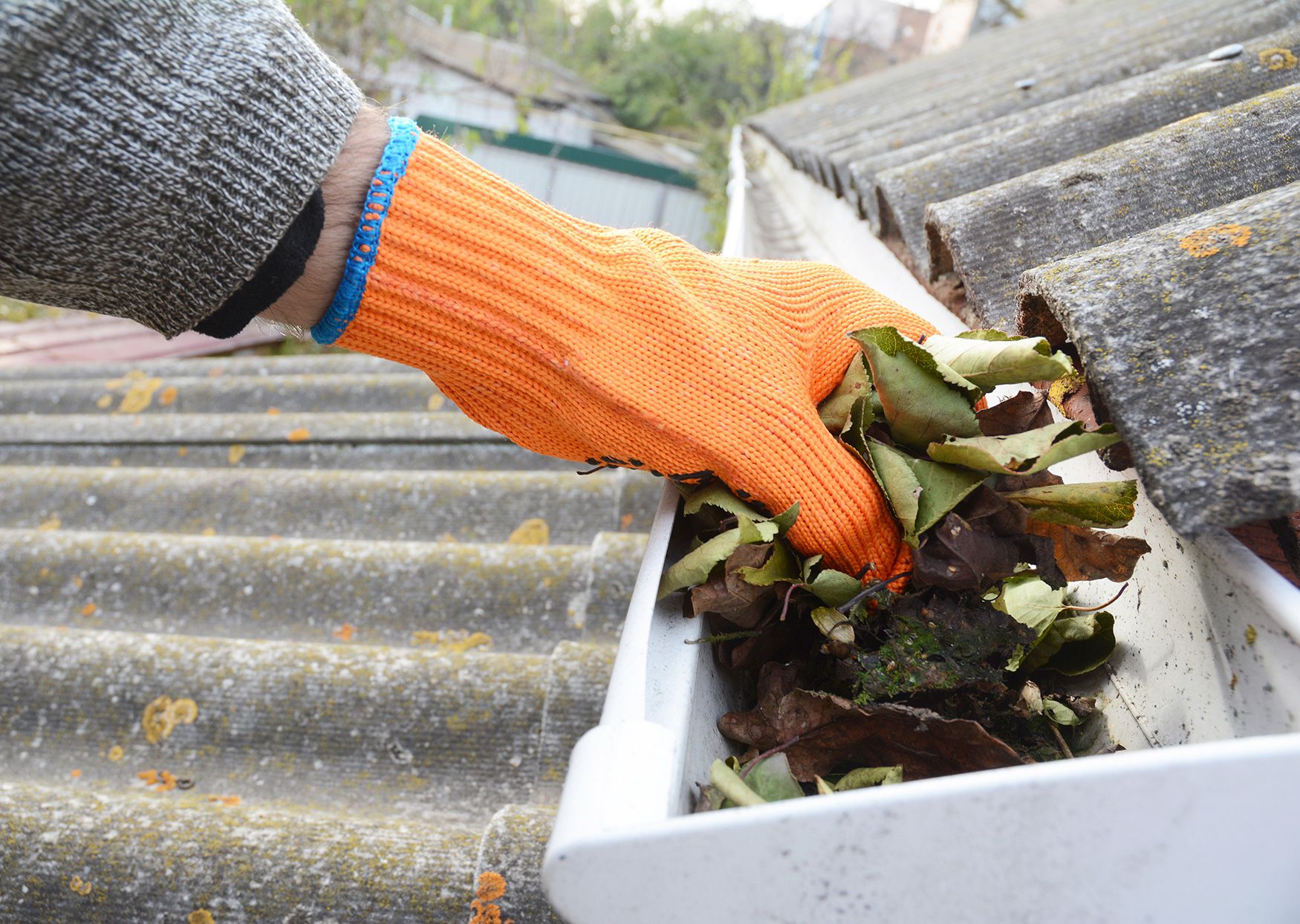
- Scoop, don’t smear: use a gutter scoop or gloved hand into a bucket/tarp. Avoid pushing debris toward the downspout like you’re stuffing a drain.
- Flush strategically: rinse toward the downspout and watch discharge. Weak flow usually means a downspout clog, not a “mystery problem.”
- Inspect while it’s clean: seams, end caps, corners, hanger spacing, and fascia condition.
Two-sentence pro tip: Check for drip lines under seams after the next rain. Water leaves a trail when it repeats the same mistake.
Common gutter problems (and fixes that actually hold)
Some fixes are legit. Some are temporary makeup.
Clogs: Clean them, then ask why they’re happening. Overhanging trees, missing downspout strainers, poorly designed guards, and roof valleys dumping into one spot are usual suspects.
Leaky seams/end caps: Reseal with a gutter-specific sealant on a dry day. If the metal is oxidized or the joint is moving, sealing alone won’t last.
Sagging runs: Tighten or replace hangers, then restore pitch. If the fascia board is rotted, you’re not “fixing a gutter,” you’re fixing a mounting failure.
Overflow during heavy rain (but gutters are clean): Sometimes the gutter is undersized or the downspout count is too low. Sometimes the slope is wrong. Sometimes the roof dumps too much water into one area. Diagnose before you buy gadgets.
When it’s time to call a pro (yes, even if you’re handy)
Call for an audit if you notice any of this:
– persistent dripping at multiple seams after resealing
– gutters pulling away from the fascia or wavy alignment
– rust-through spots or pinholes appearing in clusters
– recurring basement dampness despite clean gutters
– water jetting out of corners during storms (often a pitch/downspout capacity issue)
A good pro isn’t just “cleaning.” They’re checking pitch with intent, evaluating fascia integrity, and spotting failure points you don’t see from a ladder rung.
Preventive maintenance costs less because emergencies are expensive
Budgeting for gutter care is boring. Emergency repairs are not.
A simple approach I like:
– set aside a small annual amount for cleaning + sealant + a few hangers
– keep a buffer for a downspout section or fascia repair
– spend upgrades money only when it reduces repeat labor (like better hangers or improved downspout routing), not because a product claims to be “maintenance-free” (nothing is)
Also: routing matters. A downspout that dumps right next to the foundation is technically “working” and still causing problems.
Roof, siding, landscaping: gutters protect all three, quietly
Clean, tight, properly sloped gutters reduce:
– roof-edge rot and ice dam backup
– siding splashback and staining
– landscape erosion and trenching
– foundation saturation and basement seepage
That’s the whole game. Control the water, and you control the repair bill.
If your gutters are boring, you’re doing it right.